In the NGO world, we work for different organizations at a time, but when it comes to the strategic approach of impacting the lives of the targeted communities, we are called upon swallow our pride and explore the spirit of team work by putting together our resources towards the common goal.
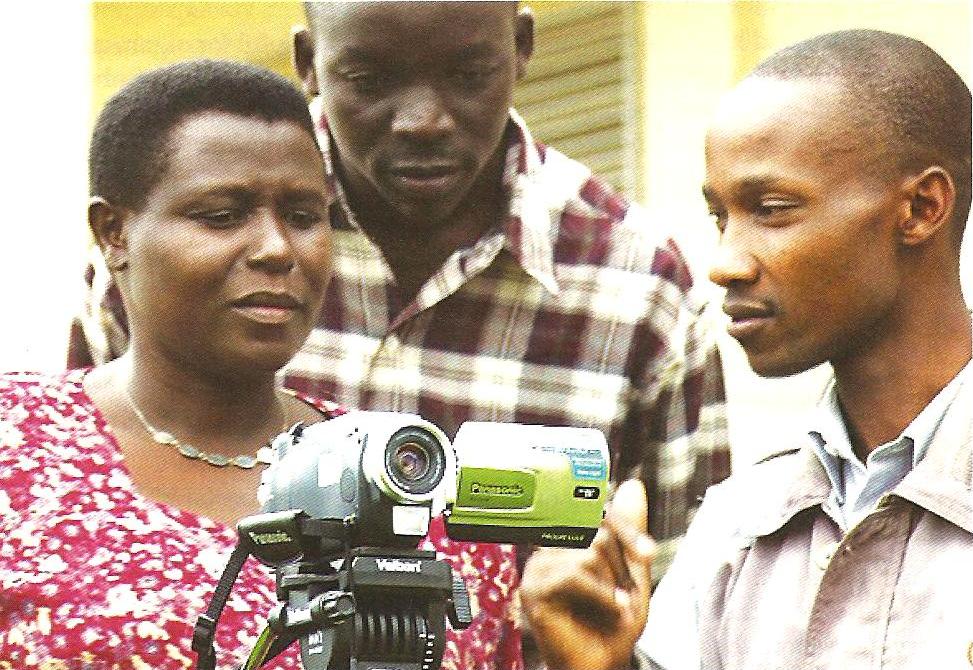
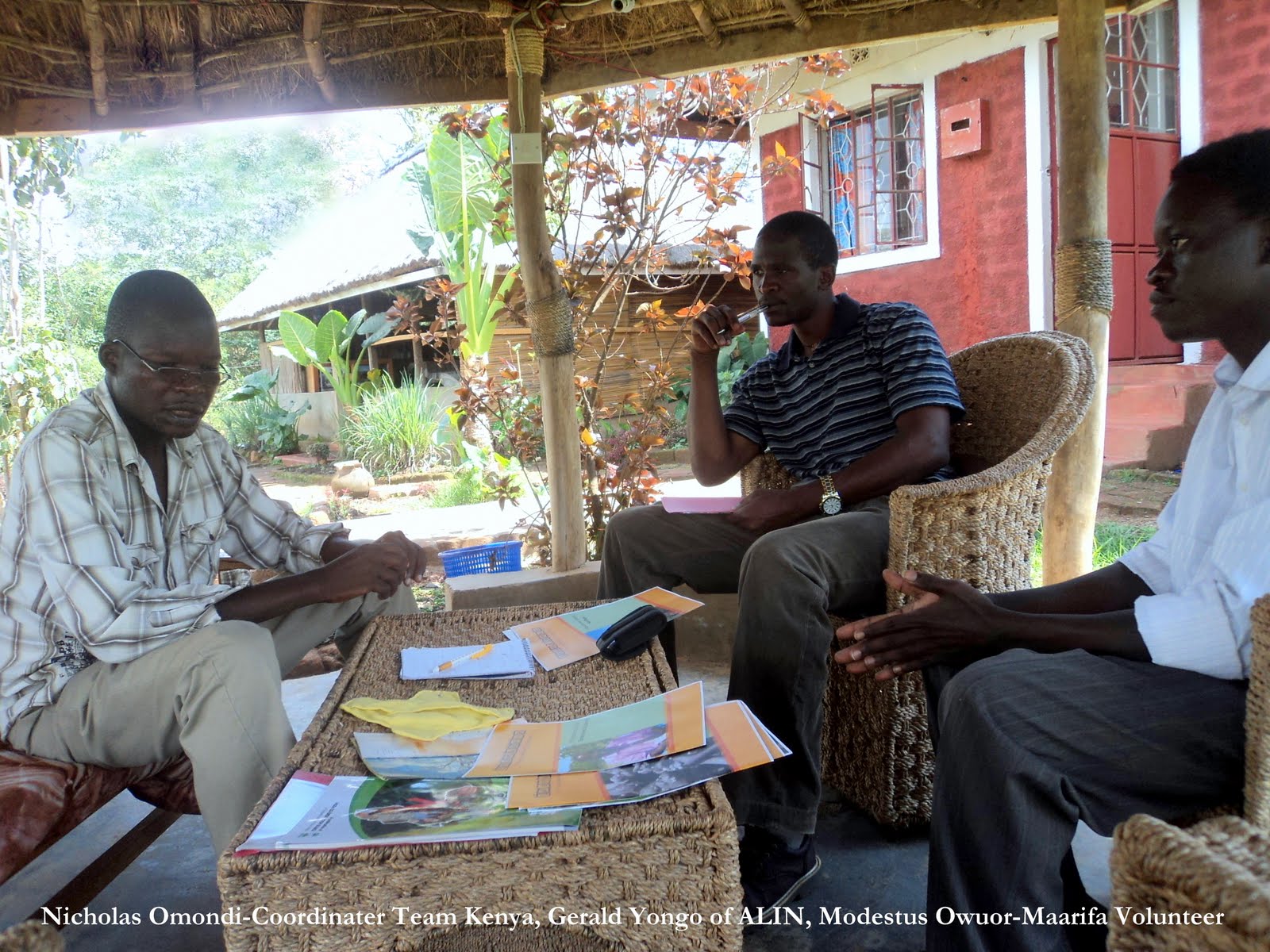
Having worked together for a period of more than two years now, both Team Kenya and Ndhiwa Maarifa saw the need of working as one and involving each other fully into the activities of each organization. After four hours working partnership review, we resolved that we are going to involve the Team Kenya Sponsored students in our forthcoming Adobe Youth Voices training as from mid this month, we are also going to assist them document and publicize 'Padi Bora' a locally made sanitary towel that can be reused for more than six months by washing and how much it has helped keep most girls in schools unlike before of when they had their days they had to remain home, together we are also going to conduct civic education on the demerits of the post election violence for the forth coming elections through sourcing for the violence videos and showing them to the community through projections, our vision kids shall also be privileged to access various learning and sharing platforms at Karibuni ECO cottages and come December 2011, we shall have a unique beauty pageant with various categories.
Not all that we deliberated can be mentioned here, but i would like to encourage each one of us that working with the community is not a competition as other organizations look at it, i remember one person once said that, "what brought you here won't take you there"'.
Wednesday, August 10, 2011
Monday, July 25, 2011
Tuesday, July 19, 2011
Developing Good Relationships With Media
The key to working effectively with the media is to build good relationship with journalists. Find out which local reporters write about issues that relate to your work. Get to know them , find out what sort of stories they are interested in. Then when you have a story you can send it directly to them, and follow up with phone call. This is often more effective than sending out general press releases.- Most journalists, except the few who are involved with very specialised and technical fields, are interested in stories of individuals' experiences. Avoid sending lengthy, dull reports and policy documents into interesting short stories focusing on the people involved.
- When press conferences are necessary, keep them short and be very clear about the message you want to give. Do not bore journalists with long speeches about your organization.
- Press releases should be short and contain the most important information in the first paragraph. Journalists are often more likely to use a story if it is already written in the style and length of artcile appropriate to their publication.
- It is very helpful for organizations to have a dedicated staff member who can deal with the media. The person is usually known as Press Officer or Information Officer. He or she should be trained on how to communicate with the media and be able to develop useful relationship with them. If your organization cannot such a post, a senior person in the organization for carrying out the this important work.
- Although it is a good idea to take the initiative in sharing information avoid making constant demand for media attention. Do not organize unnecessary press conferences or media lunches or try to attract cheap publicity for your organization, as this may mean the media may not take you seriously.
- Never allow your organization to be pushed into a situation where you have to pay for stories about your good works to be printed or boadcast. Be carefull about any gift you may make to journalists.
- Respond as quickly and as accurately as possible to queries from media organizations. Be honest.
- in difficult situations, don't be afraid to refuse to answer a question. Try to avoid unhelpful responses such as 'No comment'. When in doubt, ask for a time to provide a better and accurate response. Be firm but polite.
Wednesday, June 29, 2011
Community Benefits from First Aid training at the Maarifa Centre
Ndhiwa constituency counts itself lucky as Ndhiwa Maarifa Centre links 43 group representatives with First Aid Africa; a humanitarian organization working primarily in East-Africa to improve access to education in First Aid amongst the wider population. From research, statistics indicate that every year, millions of deaths and infections could be avoided with a small amount of medical knowledge and equipment.
In Africa , the need for First Aid is perhaps most obvious, yet access to even basic equipment and training remains poor. First Aid Africa is a not-for-profit organization which aims to provide, and encourage access to, first aid equipment and education in first aid.
Both we, Ndhiwa Maarifa Centre and First Aid Africa, believe that access to the simple yet life-saving knowledge of first aid should be available to everyone regardless of age, gender, race, religion or social status.
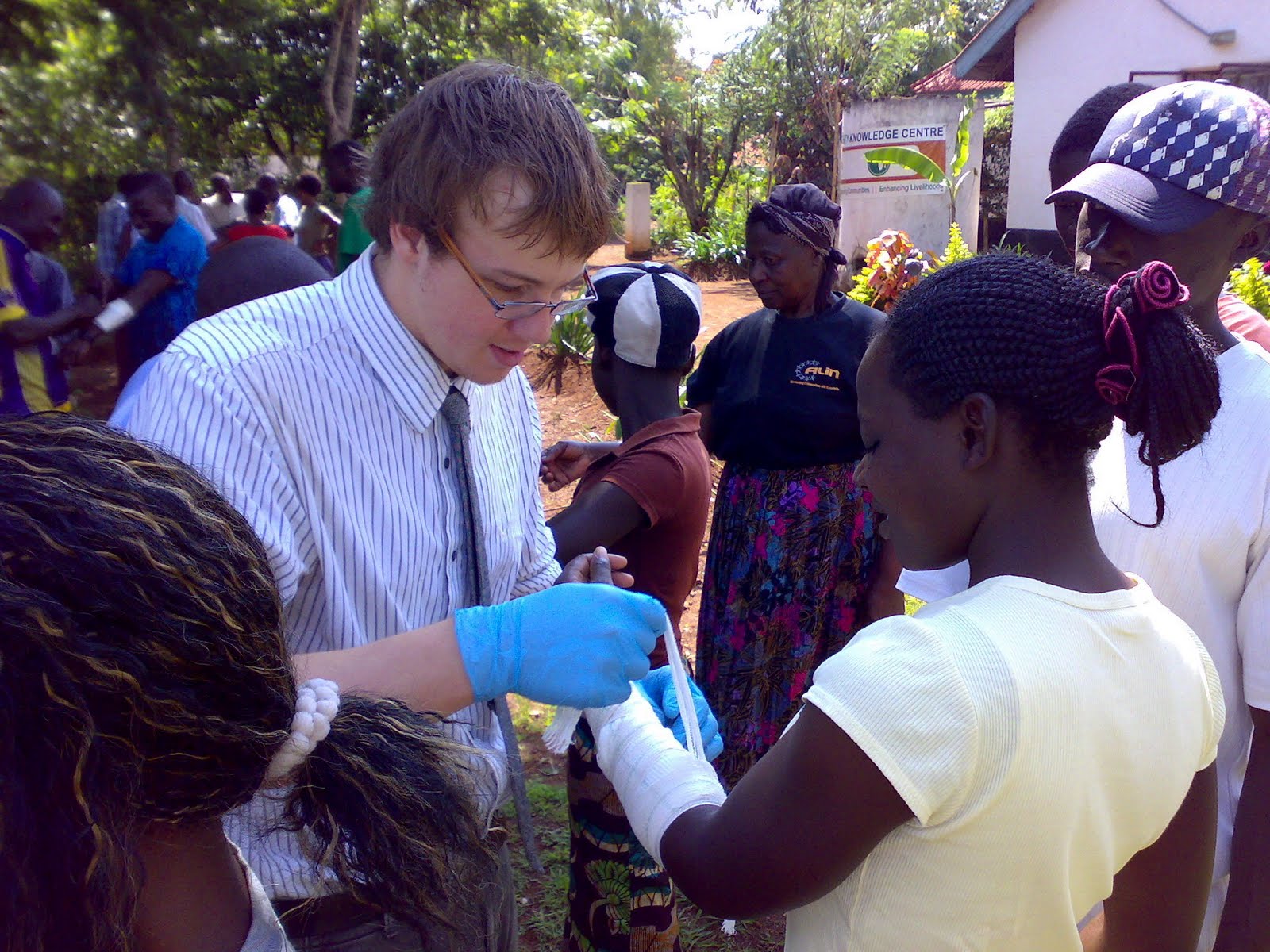
The organization’s mission is to equip as many people as possible with the knowledge, skills and equipment to respond in an emergency, and ultimately, save or improve a patient's quality of life.The 43 chosen community members are meeting for four weeks on every Wednesday for 2 hours as from 10.00 am to 12.00 pm and the greatest bit of this training is that the people are being trained by professionals at no fee and their after, the qualified shall be issued with an internationally recognized certificate.
In Kenya for one to access such trainings today, the least you are expected to part with is Kshs. 5000, excluding your travels, accommodation, meals, e.t.c First Aid Africa chose on Ndhiwa Maarifa Centre as their community entry point due to the communities trust on this centre and its broader perspective of its daily clients.
The training is of much relevance to the community members here since there are frequent accidents at the domestic levels and access to immediate medical facility is usually next to null depending on their proximity such.
The training touches on very practical situations that require immediate first aid skills like snake bites, small and deep cuts, shocks, burns, unconscious causality e.t.c. and they also issue them the first aid kit.
Monday, June 27, 2011
Where Uganda meets Kenya!
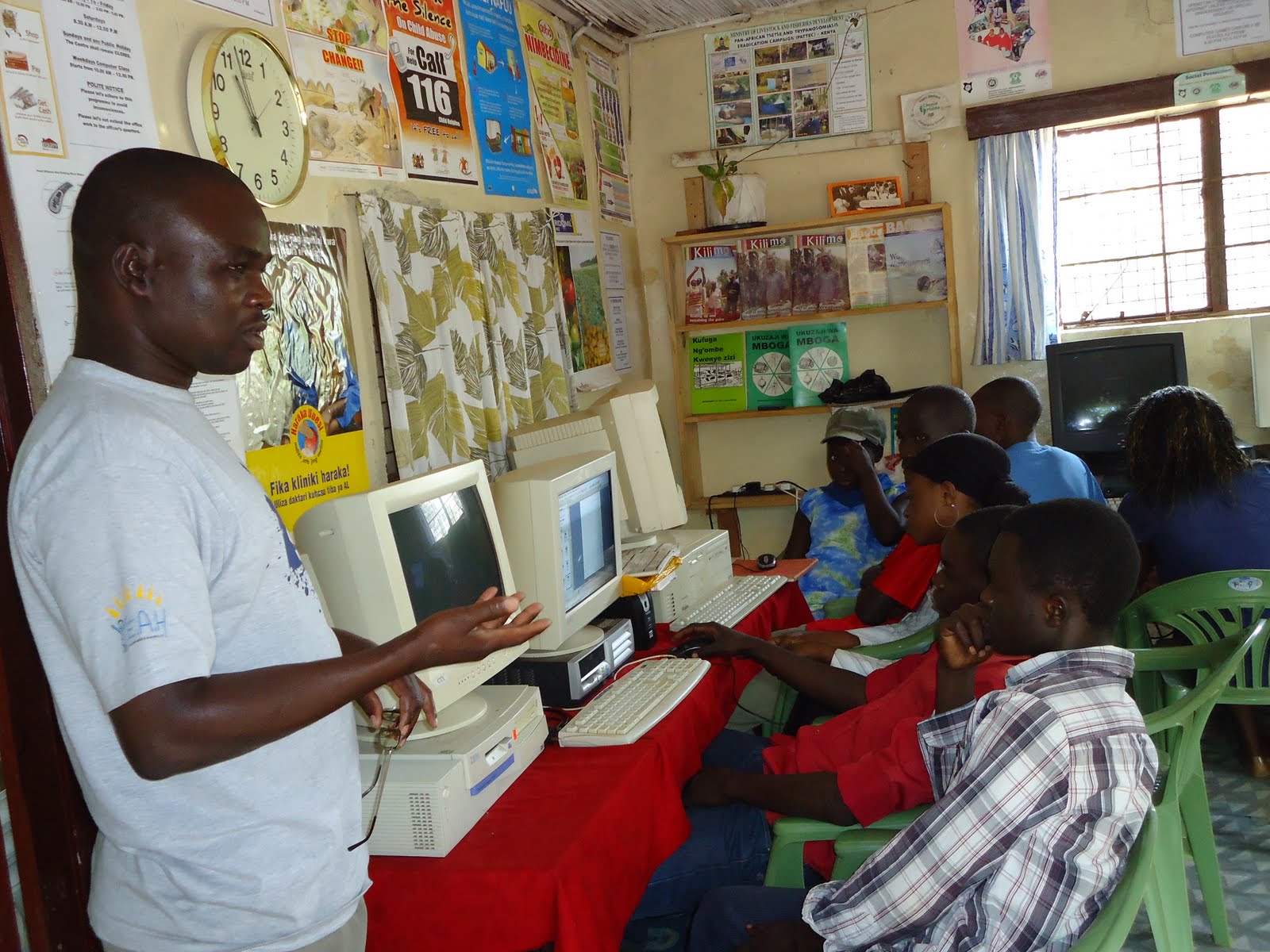
With due respect and hospitality of the Kenyan people, Ndhiwa Maarifa Centre was glad to host Mr. Bosco Okello, Awach field officer, in an experience exchange programme organized by ALIN headquarters'.
The field officer was able to learn much from the center's daily running and even moments of sharing with the advisory committee members and the community at large.
ALIN promotes information sharing of this kind to enable both the community members and visitors to learn from each others experience. We were able to learn so much of the Uganda's culture and governance with much appreciation of their modern agricultural practices and techniques. It was our pleasure having you here.
Friday, June 10, 2011
Kenyas' Budget at a Glance
Faced with the current challenges of rising food prices, the government is investing billions of shillings to expand and construct irrigation projects country wide and transform agriculture into business.
The government will spend 10.2 billion in financial year 2011/12 for expansion and construction of new irrigation projects countrywide including Ndhiwa. Completion of these projects will assure food security for Kenyans on sustainable basis. Kenya has a huge untapped potential for irrigation agriculture estimated at about 1.7 million Acres. To date only 20% of this has been utilized.
The economic stimulus programme irrigation projects successfully brought an additional 40,000 acres under rice cultivation in Bura and Mwea, maize in Hola.
To deal with food insecurity once and for all, the government will invest huge amounts of money to expand and initiate various irrigation projects spread throughout the country. Kshs 8.6 billion is a conditional transfer to National Irrigation Board to complete all the ongoing irrigation projects. The completion of the ongoing projects will increase will bring under irrigation a total of 36, 100 acres of agricultural land that will benefit about 560,000 households, while the new projects will bring under irrigation about 16,000 acres in the 2011/12 out of 70,000 acres we plan to complete in the medium term. This intervention will benefit about 300,000 Kenyans.
Towards transforming agriculture and livestock into business, the government has launched an Agribusiness and Livestock Development Fund, with an initial amount of Ksh 8.6 billion and Ksh. 400 million, respectively.
The Agribusiness Fund is a wider project of Ksh. 5 billion Impact Investment Fund under the Kenya Incentive Based Risk Sharing Agriculture Lending (KIRSAL) to be implemented over a four year period in order to leverage Kshs. 50 billion lending to agricultural sector and rural development targeting another 1.5 million small holder farmers and over 10,000 agribusinesses through out the country.
The operationalization of the project will empower and position the private sector players in the agricultural sector to deliver pro-poor economic growth, diversify our exports, expand employment, reduce poverty, and assure food security on lasting basis.
Subscribe to:
Posts (Atom)