Tuesday, January 25, 2011

Communities Perish in Wealth

Mango is a tropical fruit of great economic importance if its nutritional and economical value is to be considered. We realize that the importance of any product is only recognized when its value is realized by its producer.
For years now, indigenous mango fruit has been produced in the tropics of Nyanza province and its performance here has proved to be very credible. As nature dictates, all these trees usually fruit at the same period of the year, giving a fruity scent all over the village, it is the fruity month of December! The excess of these fruits can never be consumed by the immediate local market. We have grown to see communities here perish in an advanced poverty scale as they dwell in deep wealth. A third of these fruits from this region have rot in farms for the past centuries, yet no authority has had an eye to correct these! These efforts need to be appreciated and tapped for the growth of the entire economy.

Thursday, January 13, 2011

Bringing the Library to the Community

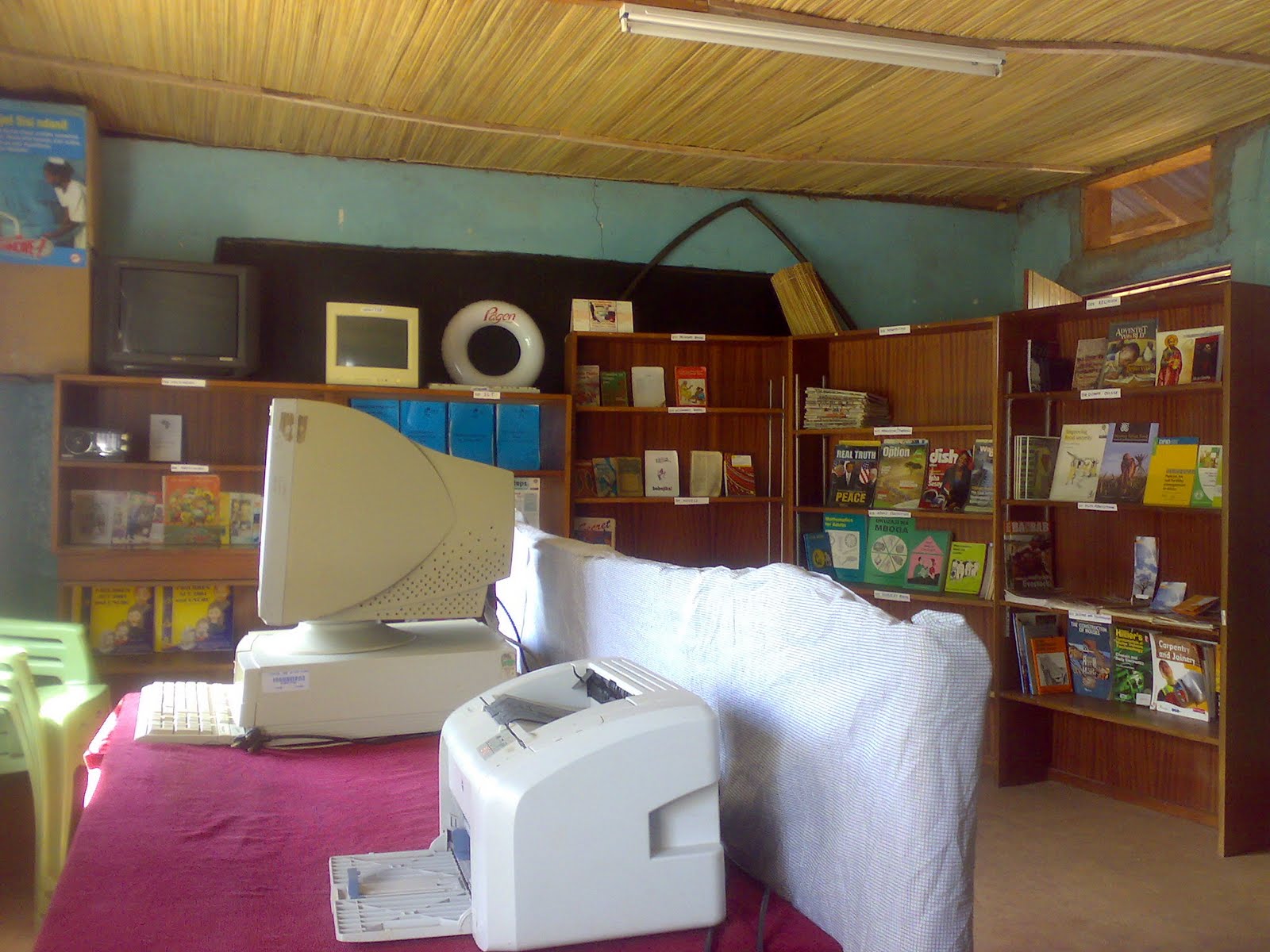
In Africa, when an old man dies, it is a whole library that goes down. Ndhiwa Community Maarifa Center and the entire community highly appreciates the efforts made by ALIN, Institute for Rural Development Kenya and the Book AID foundation in seeing the installation of this one and only community library in this region.
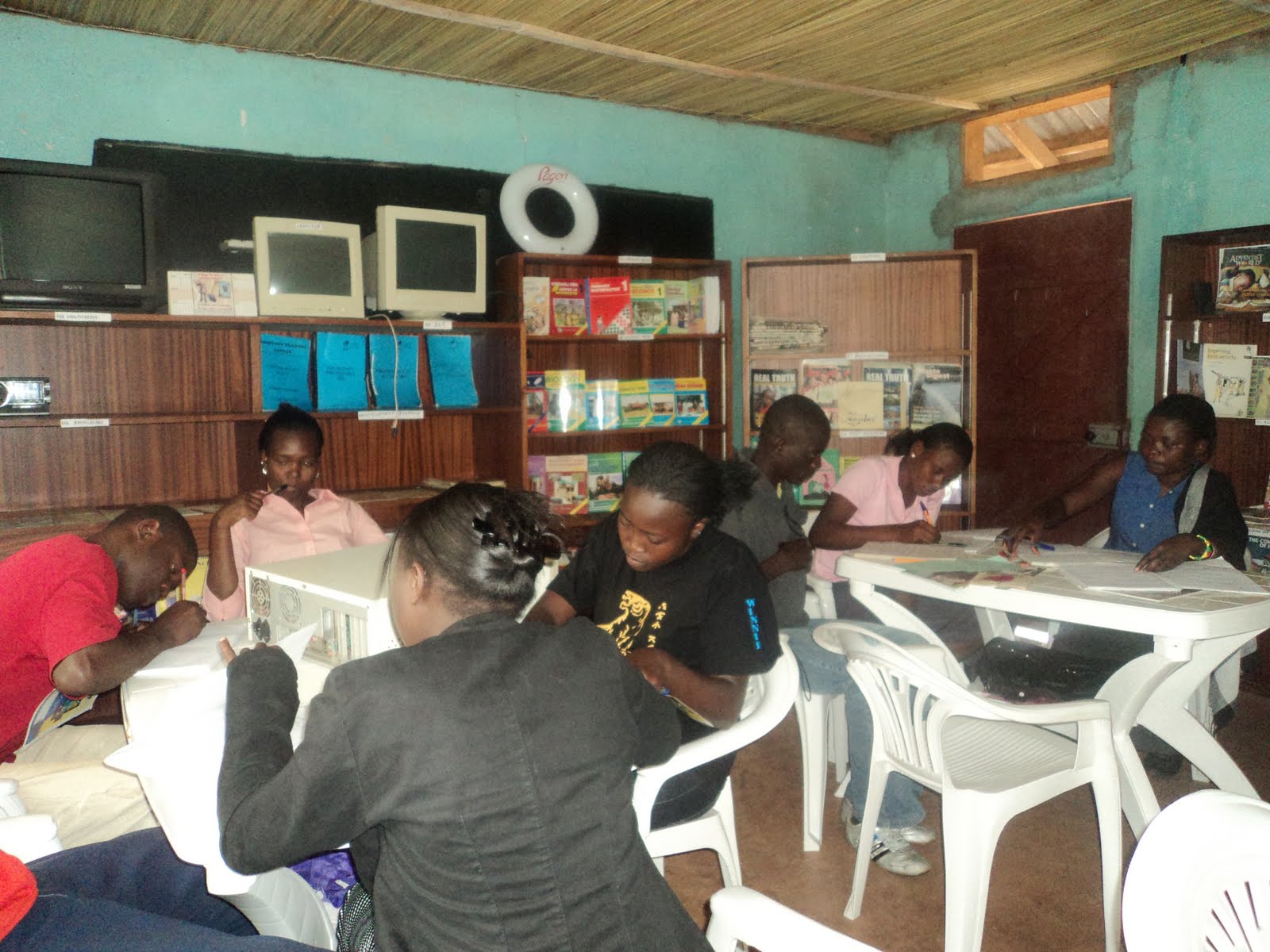
With the reception of the secondary and primary school text books at the center, the idea is being appreciated by every individual who comes across the information from all corners. Most of our sons and daughters here come from economically challenged families. To most of them, owning a personal text book here is a bad dream.
We are glad that most of the students can now work on their school assignments from here and even borrow the books to work from home hence presenting them on time.
Our appeal now is to source for more resources and copies of these text books to enable us begin a mobile library down into the interiors of these community.

Thursday, December 16, 2010

Keeping bees and harvesting honey in relation to gender

Keeping bees and harvesting honey are traditionally seen as jobs for men, in many countries. But when using modern types of beehive - which are kept on the ground rather than put in trees - beekeeping can be a very good way for women to earn extra income.

In Uganda, the Api-Prodex company is promoting beekeeping in farming communities, through training and supply of equipment. Farmers are able to lease beehives, smokers and other equipment from the company, and repay the cost through honey sales. They are also given full training in beehive management to maximise their honey production.

The company, now over ten years old, is run by Margaret Ndekera, who was recently recognised at an Africa-wide forum for agribusiness leaders. At the event, in Kampala, she explained more about her successful business to Pius Sawa.

To listen to the full interview, click here: http://www.agfax.net/radio/detail.php?i=384

Finally the library is here


Ndhiwa Maarifa Center has finally finished with the renovations and the first stocking of the community library.
It is the pleasure of the entire community to have this library hosted here since poverty scale in this community is high causing challenge to most pupils and students to access any reading materials once out of the school library.
The library is to be fully in use as from 10th January 2010.

Wednesday, December 15, 2010

2010 United Nations Climate Change Conference


The 2010 United Nations Climate Change Conference was held in Cancún, Mexico, from 29 November to 10 December 2010.[1] The conference is officially referred to as the 16th session of the Conference of the Parties (COP 16) to the United Nations Framework Convention on Climate Change (UNFCCC) and the 6th session of the Conference of the Parties serving as the meeting of the Parties (CMP 6) to the Kyoto Protocol. In addition, the two permanent subsidiary bodies of the UNFCCC – the Subsidiary Body for Scientific and Technological Advice (SBSTA) and the Subsidiary Body for Implementation (SBI)– held their 33rd sessions. The 2009 United Nations Climate Change Conference extended the mandates of the two temporary subsidiary bodies, the Ad Hoc Working Group on Further Commitments for Annex I Parties under the Kyoto Protocol (AWG-KP) and the Ad Hoc Working Group on Long-term Cooperative Action under the Convention (AWG-LCA), and they met as well.


This is for your information on international matters concerning climate change; for more updates visit: http://en.wikipedia.org/wiki/2010_United_Nations_Climate_Change_Conference

Walking the Talk; Religious leaders demonstrate by planting trees


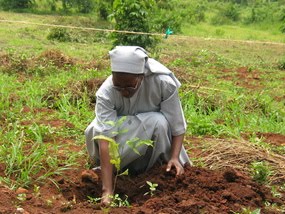
A field trip about 50 kilometers from Kampala, was an exciting moment for the religious leaders to show cause for their call to addressing challenges affecting the world today. As the world gathers in Cancun, Mexico for the climate change meeting, Men and women of God were digging holes to plant trees in a farm belonging to one of the particiapnts in a four day training workshop for religious leaders, on Understanding climate change. Imam Kasozi from the Muslim faith, has planted hundreds of acres of trees in his farm in Kalule, Luwero district. The trip started from a tree nursery in Kakiri, Wakiso district, where district officials welcomed and addressed the religious leaders. Each participant was given free seedlings(fruit and trees) to take home.The training, funded by International Network for the Availability for Scientific Publications, INASP was aimed at empowering the religious leaders with skills to influence policies on climate change and science.
I believe this is an idea that we as Kenyas' religious leaders can learn from and be part of the world that is trying to save the universe. Think about it!