Showing posts with label Photo by Gerald. Show all posts

Saturday, June 9, 2012

Visiting a Member of Ndhisu Horticultural Farmers Group in Mirogi

On the 24th June 2012, we were able to meet a new active farmer from Ndhisu Horticultural farmers group through the support of Mr. Timothy Obabo of Kabonyo CBO.  The group has one of the largest coverage so far since it's comprises of 2 districts with about 100 plus farmers both in Ndhiwa and Suba.
The farmers came together to form this cluster with an aim of seeking a collective market for their productions. Each of them was to produce the same product at the agreed season which in return was to attract a reliable market. 
Talking to Mr. Otieno Charles who is one of the group members, this is what he had to to say “this idea was so brilliant when we first thought of it, but later on it became a challenge to manage such a large group, since not everyone kept to the spirit…but we are still a young group that is just 6 months old since registration”.
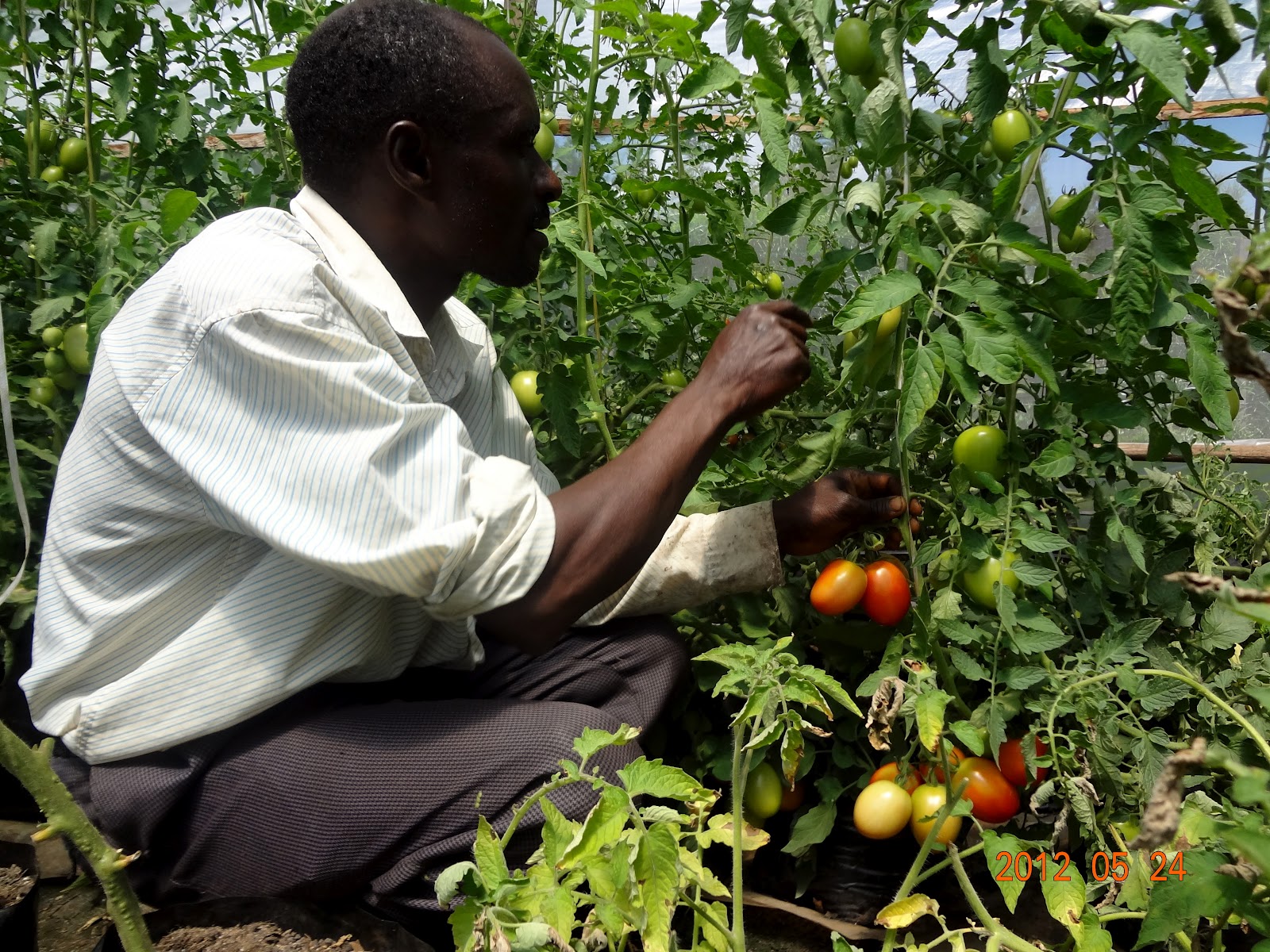
Talking at his well utilized farm, Mr. Okello encourages other groups or even individual farmers to remained focused on working hard on their farms first before raising an eye at any possible support that may come from other supporters or organizations of good will.
The farmer produces:
  • Tomatoes in a green house that he contributed towards its construction   
  • Butter nut
  • Orange flesh sweet potato
  • Bulb onions
  •  Water melon
  •  Bananas 
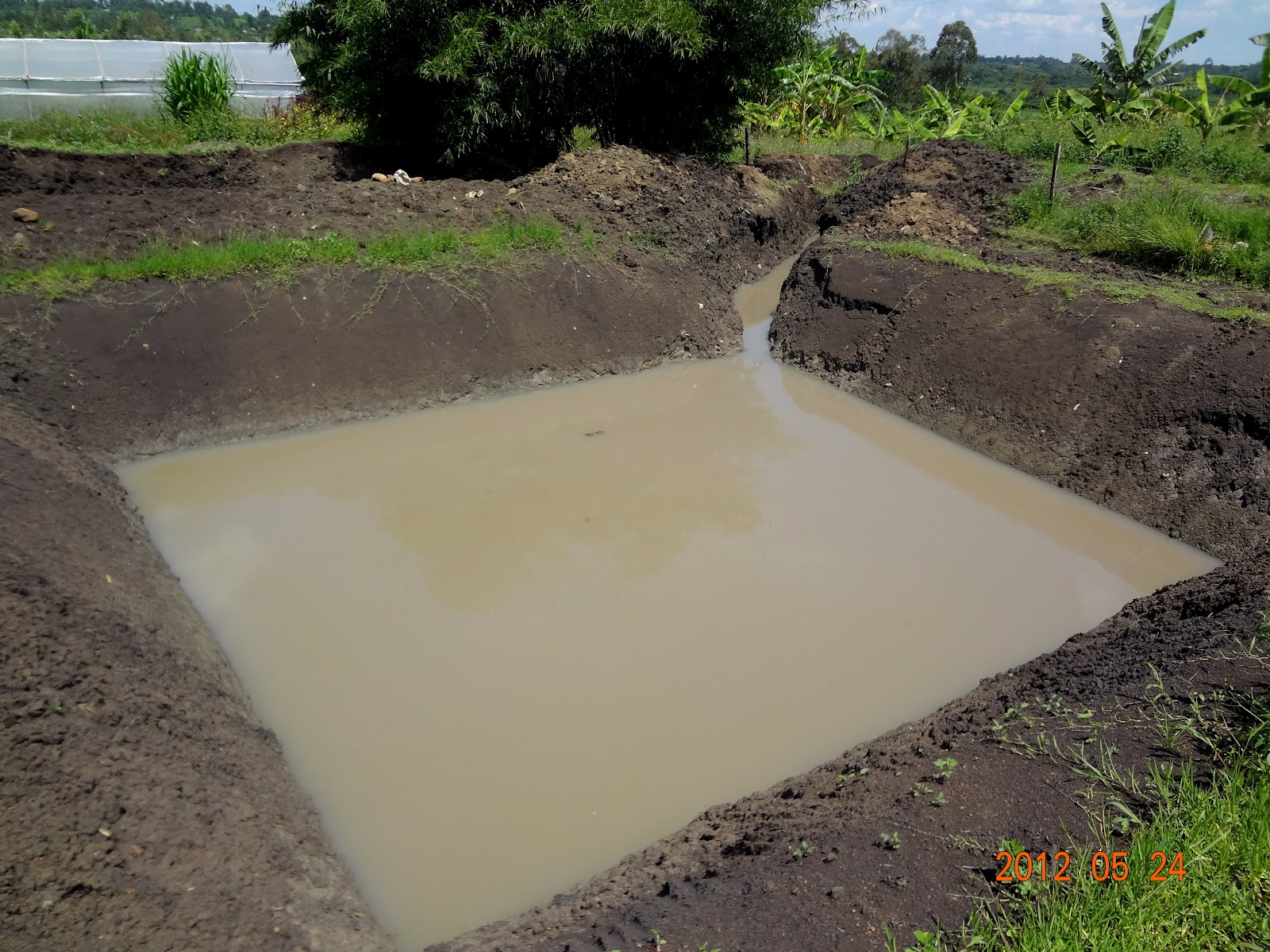
     Construction of a water pan for the rain water harvesting is also in progress with the support of APHIA II USAID programme having recognized his great efforts.
     Contact: 0729-072 214

Tuesday, May 29, 2012

Revisiting Our Kachuth Demo Farm

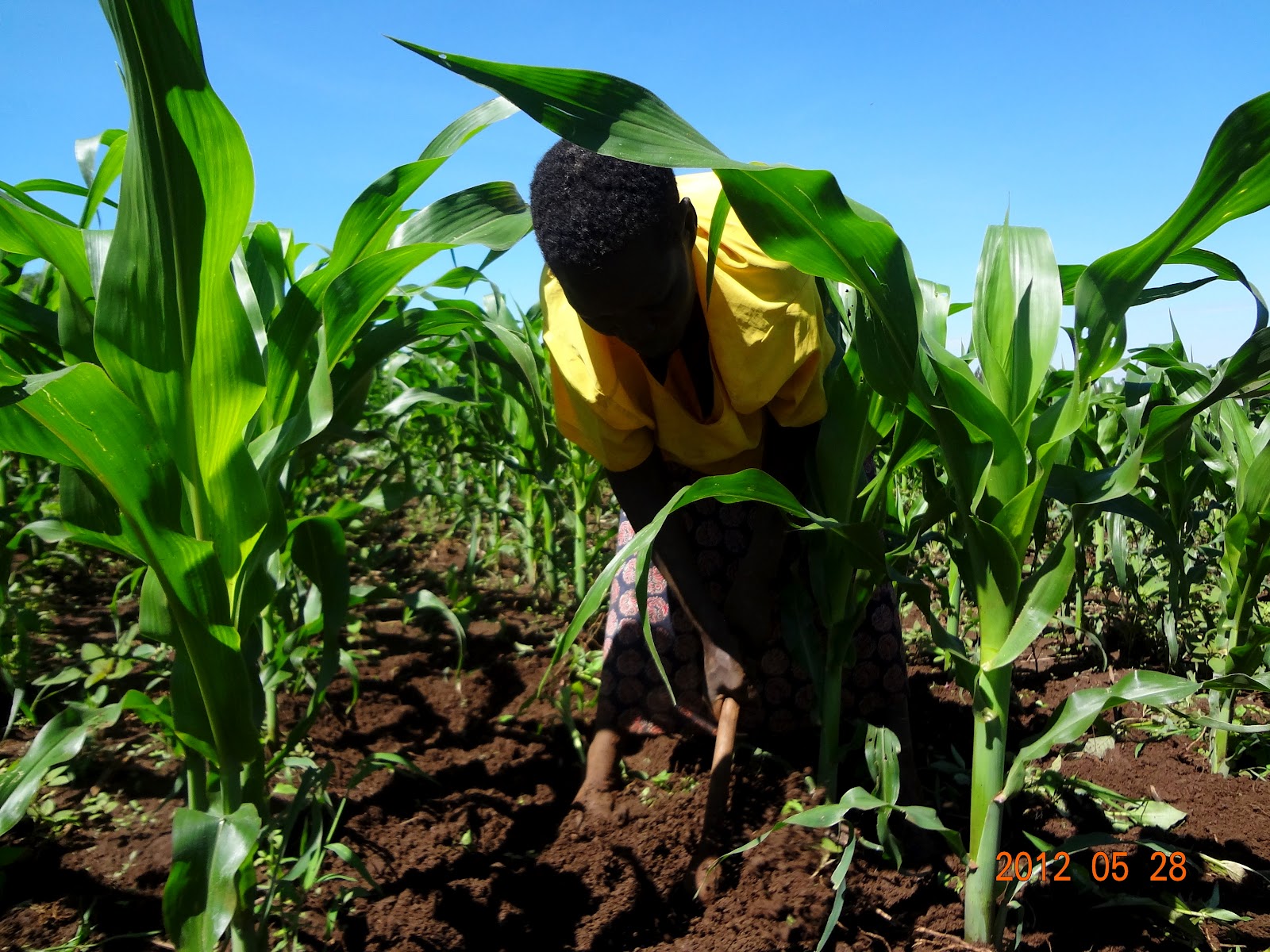
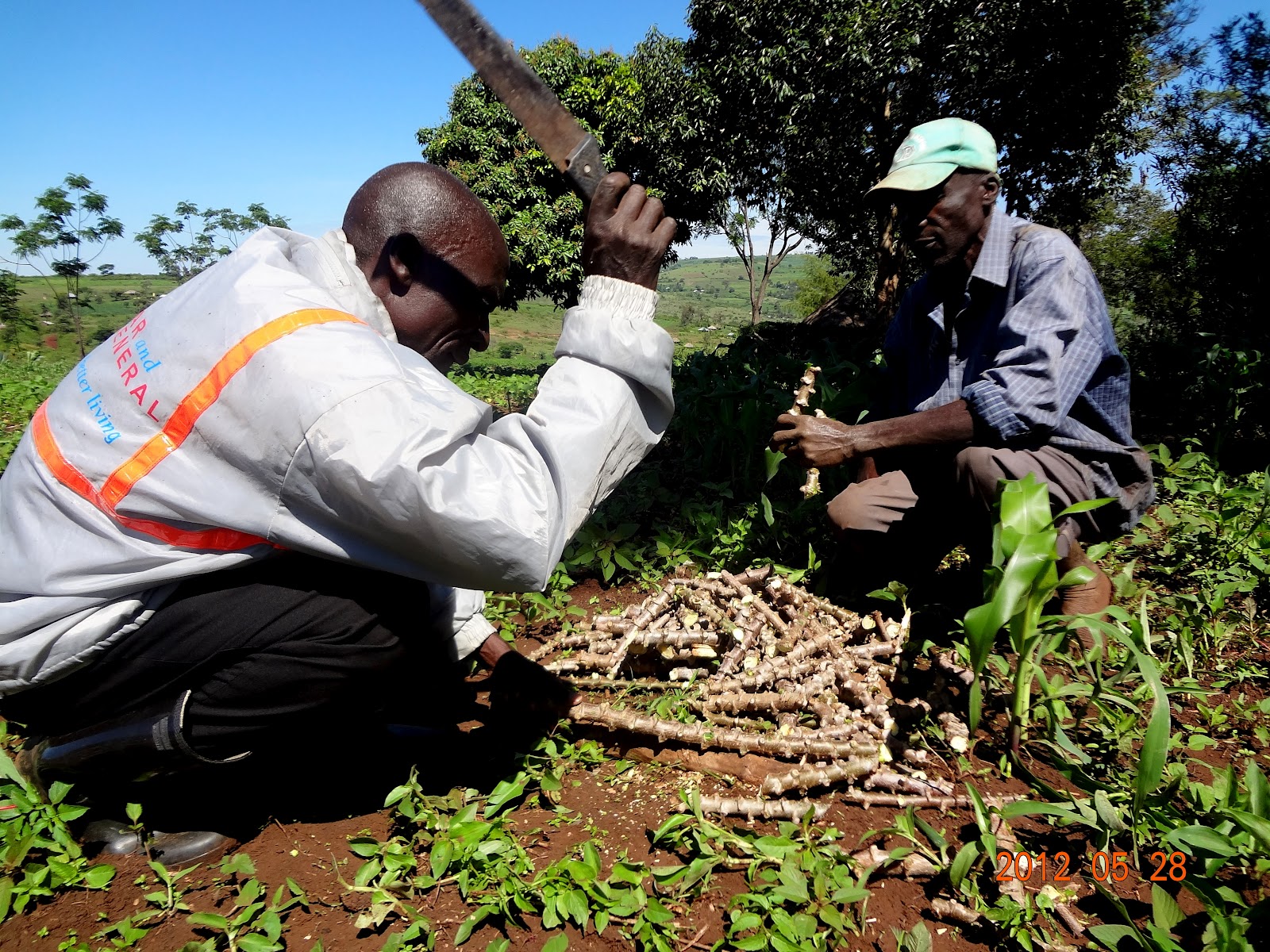
 On the 28th of May 2012 at 8.30 am, we begun a muddy and slippery journey to our demo farm in Kachuth, Kobama Division with the Divisional Agricultural Officer, Mr. Omotto.
On our motorbike carrier; were the MM cassava series cuttings, a species that is resistant to cassava mosaic, drought and also matures in less than 5 months. The local species takes a life span more than 12 months to mature and furthermore, it is susceptible to the threatening cassava mosaic, a disease that flushed out most cassava plantations in Kenya in the late 1990's.
The 5 maize species, 2 sorghum species, tomatoes and the bean species are already at the knee level. Even though crops are doing much better, but the excess rain is now streaming threats to the beans and the tomatoes that are already fruiting. 
All these threats have been taken into account and the farmer too has been advised on the control measures that he has to check on or communicate to us whenever they persist. 
Otherwise we are projecting to have the field day either in late June or mid July 2012. All our readers and follower are invited when that time comes.

Monday, April 16, 2012

Attending East Kobwaye Chief's Baraza

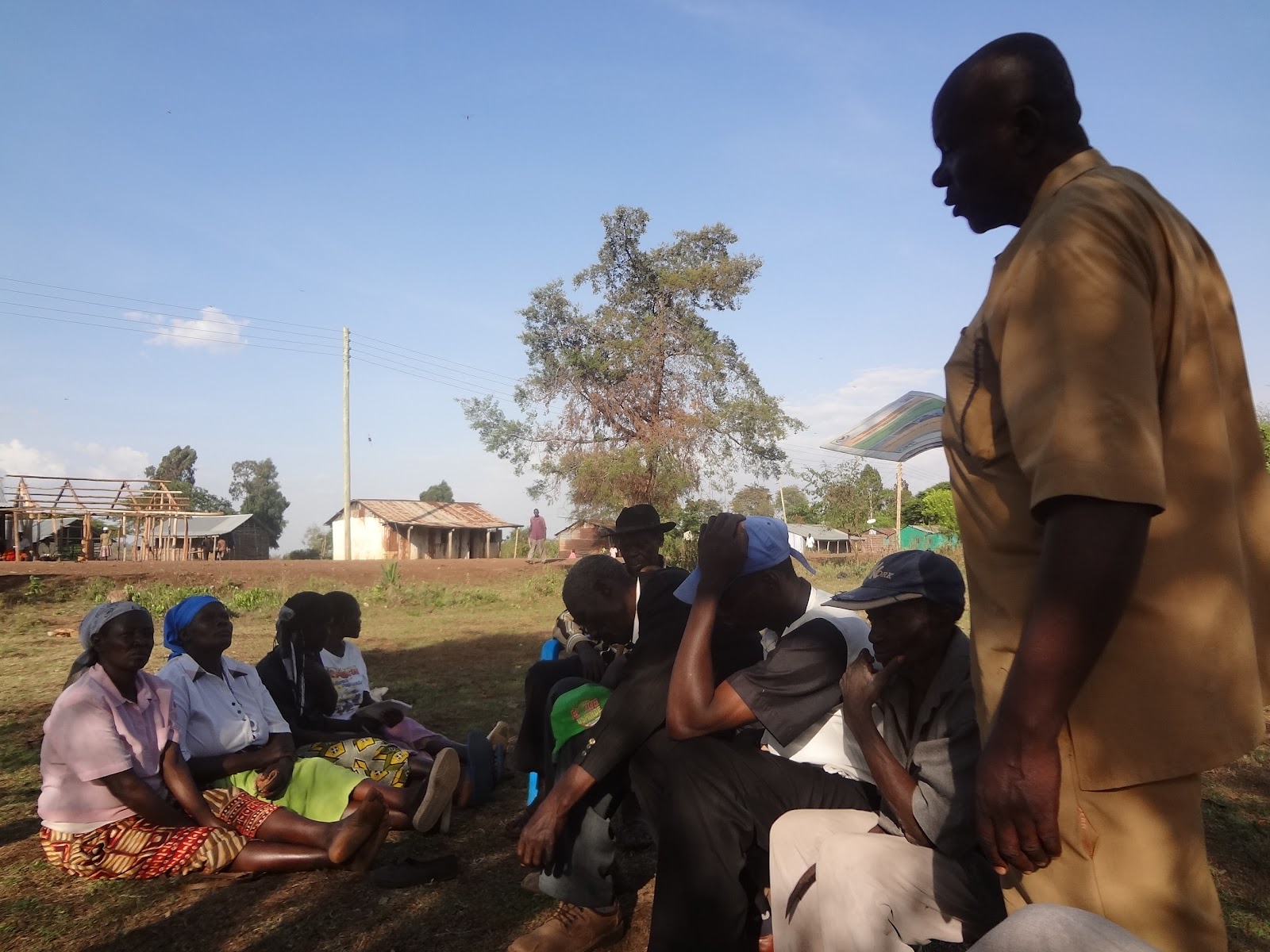
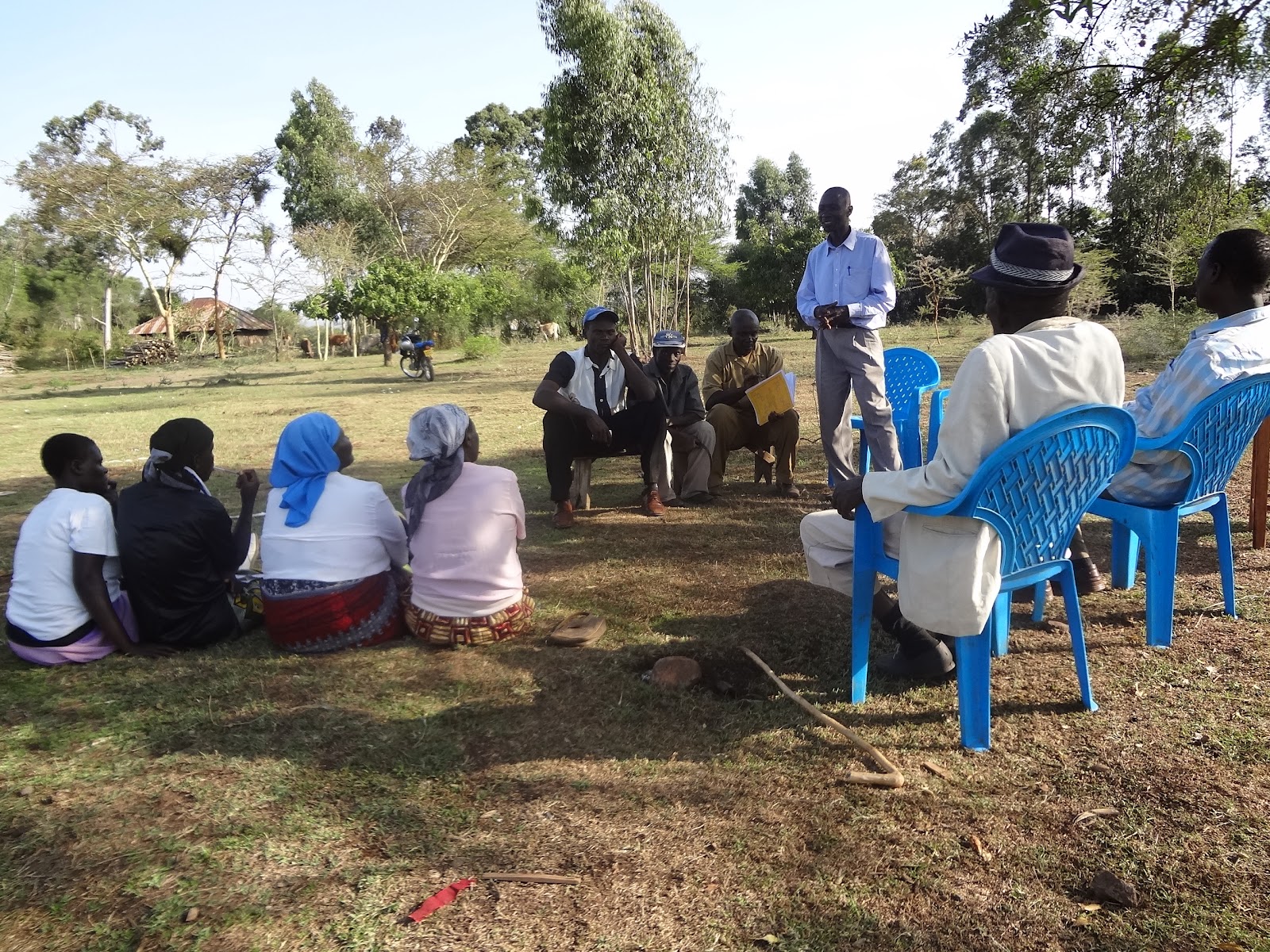
After a lengthy talk from the farmers representative Mr. Paul Okello on the importance of local poultry keeping and the need for farmers to embrace the information that had been brought to them by us as Ndhiwa Maarifa Centre and  KAPPAP resource person Mr. Evance Odhiambo, most farmers gained interest on the idea having had from one of their own and someone who was already in this business. In the meeting we had a population of 19 M & 9 F.
We gave the group an eye opener in an example format and it went this way;  if one farmer keeps 10 hens plus one cock with a vision that each hen produces 10 chicks and then you multiply it (10 chicks) by the 10 hens then in less than 4 months you will be having 100 hens plus the previous 10.
Currently at the local market rate, a hen is sold at a minimum of Kshs. 600. Suppose you wanted to sell the first lot, how much will you gain?  And secondly, suppose you gave them room to replicate! That marks a simple achievable strategy to fight the arising poverty gap. In the next trainings, we shall focus on how to construct different designs of poultry houses and disease management.

Friday, March 23, 2012

ALIN Partners with Practical Action On Knowledge Products

In ongoing efforts to roll out activities in the Knowledge Creation and Empowerment Pillars of the ALIN 3 Strategy, ALIN has signed a Memorandum of Understanding with Practical Action under their Practical Answers initiative to disseminate Practical Action’s Knowledge Products through the Kenya-based seven Maarifa centres. This will be mutually beneficial to the two organisations.
For ALIN, it will enable us to meet the information needs of our beneficiaries and add a diverse range of relevant knowledge products to Maarifa centres. On their part, Practical Action will be in a position to track and monitor the usage of its information and the impact it makes on the livelihoods of poor communities. 
The site is great since various information can be accessed now on very practical issues that would have required the intervention of an expert or consultant and furthermore, in a situation where you miss the info that you needed from the site, you have the right to leave a message on the site with some of your necessary details and in a short time (24 hrs - 48 hrs) a feedback will be right there.
Click here to visit the site.

Meeting the Kokul-Komino Self Help Group

On the 21st of March 2011, we visited the KK Self Help Group in Nyarongi Division, South Kaganda in Ralang' Village. The group comprises of 30 members (19 F and  11 M) and they practice various agricultural activities ranging from:
  • Poultry Keeping
  • Brick making
  • Bee Keeping
  • Horticulture
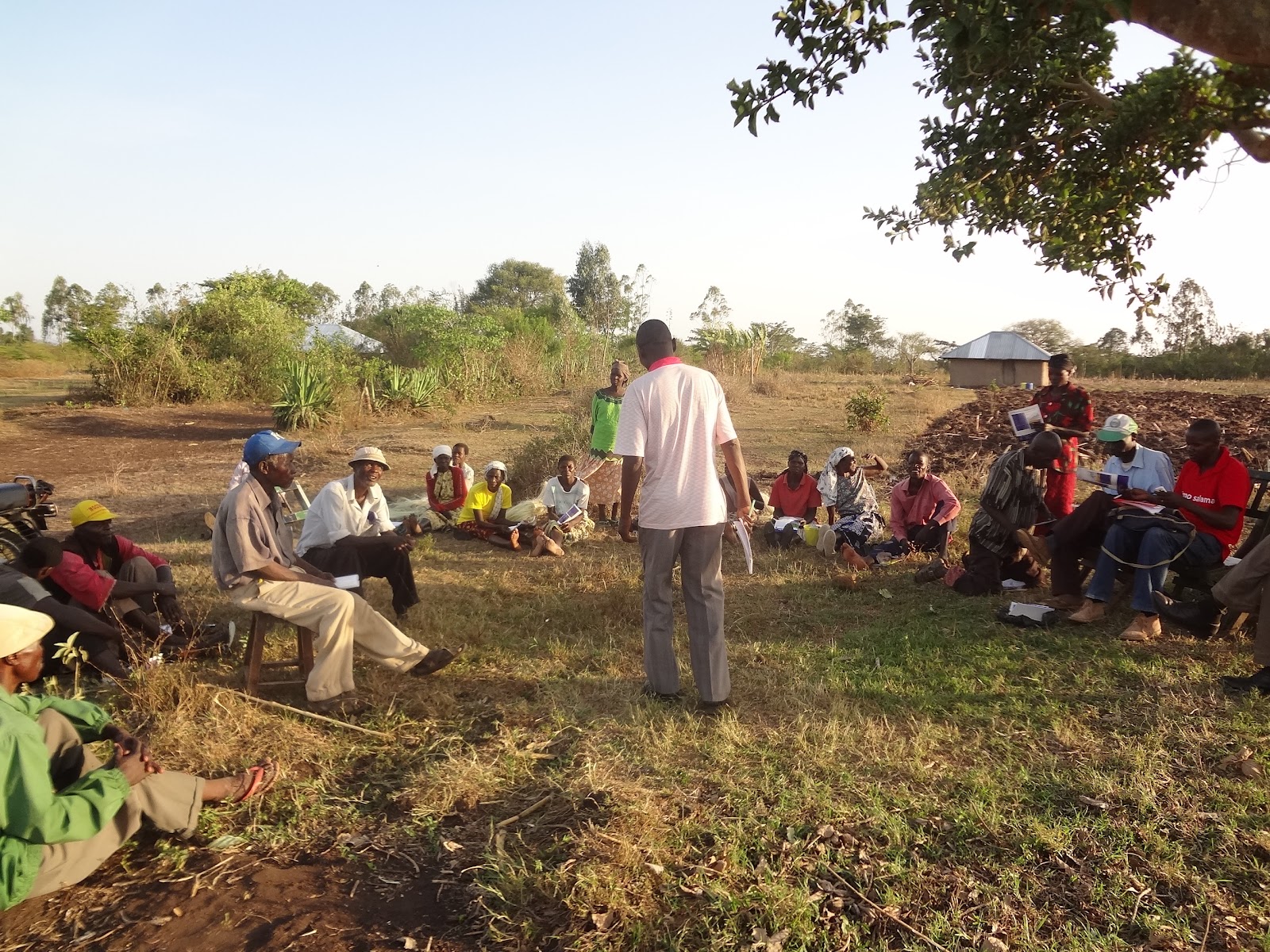
During the groups meeting, present were the Kilimo Salama Plus team that trained and insured the farmers against drought or excessive rainfall, something that was very positive and most farmers insured their farms at a minimal of KS 600 per production acre, for more details we shall give you the links in our next post, we also had a resource person from KAPPAP, who we had come with us as resource person and he briefed the group of how local poultry had moved people who took it as a business to higher grounds and they too shall be trained on the same with an expectation of them starting with the little number they already have. KAPPAP also agreed to train them on beekeeping and also the procedures involved, later we were to link them with Equity Bank to brief them on loaning too.
Finally ALIN was here to further open the groups eye on other possible areas they had interest on and would like to be trained on and how they could acquire various knowledge from our resource centre and partners without having to sit in a class. We further discussed issues on multimedia content (videos, internet), local farmer to farmer exchange programmes, importance of documentation and the library services. From the talk, the group asked us to help the get training on the following areas:
Farming as a Business
  • Water and sanitation
  • Farming as a Business
  • Tomato production
  • Kales Production
  • Adult Education
  • Tree nursery as an IGA
After analyzing their request, we felt that we would first with farming as a business because it marks the foundation of all this projects and all this project must have the bookkeeping skills.
In terms of adult education, we believe that it is their right to be trained but they first to agree on the dates of the training and give us the number of those who are interested before we approach the Adult Education officer.

Tuesday, March 20, 2012

Baseline Survey of East Kobwaye, Kobama Division - Block 1

 Today, 20th March 2011, was a chief's baraza in East Kobwaye in Kobama division. We had previously asked the groups contact person Mr. Paul Okello to urge farmer groups who had interest in Beekeeping and local poultry keeping to present themselves or get registered  with them so that we could get the list and their contact from their representatives and also have a one-on-one discussion with those present on the areas that they felt they had information gaps.
We managed to get a list of:
  • 39 farmers with interest on local poultry keeping
  • 16 farmers in with interest on  beekeeping
Previously we had got a clue from the contact person on their area interests and immediate activities that had be3n going on in the area before. We jointly went with someone from KAPPAP organization who has a specialty on the above areas of interest. KAPPAP will begin the training on the 27th March on the above issues concurrently.
We also realized that there was also a big  information gap on the idea of fish farming and ALIN (Ndhiwa Maarifa Centre) is getting in touch with one consultant from the Rongo Lake Basin Authority and then we shall schedule a date when the 2 days training can take place. 36 farmers showed strong interest on this.

NALEP Stakeholders Forum in Ndhiwa

The idea that was recently created in Ndhiwa District by  Ministry of Agriculture to have a recognized structure and protocol that can enable all the development workers to reach all the stakeholders of interest through an elected divisional and district farmers representative was a long awaited idea that has just come at the right moment. Through this channel farmers now have a platform of bargaining or soliciting for markets and the needed trainings through this office as a team.
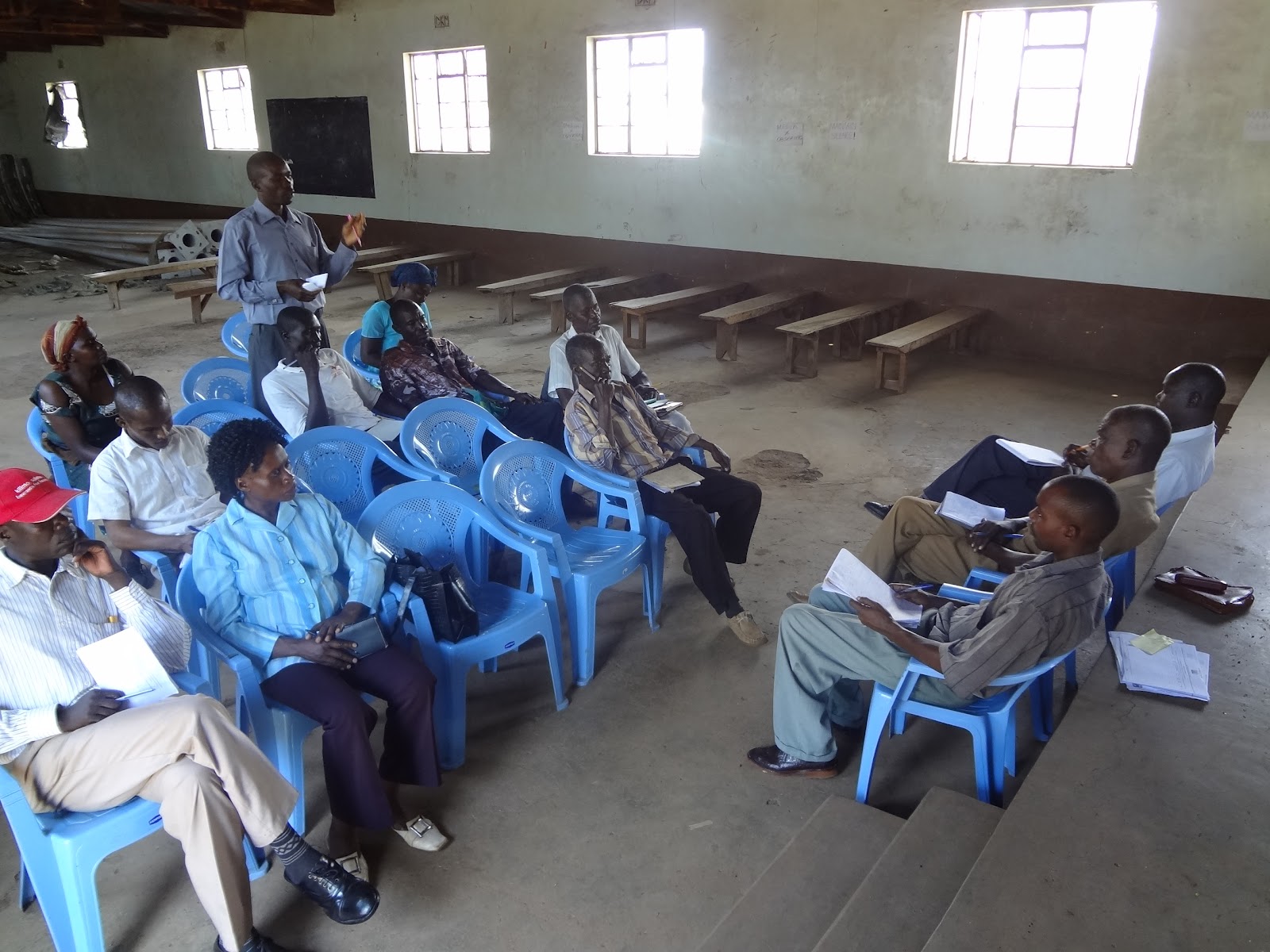
In this stakeholders meeting organized by NALEP, it brought in a number of farmer representatives who had benefited from the previous trainings by NALEP and other major development stakeholders.The farmers aired out the areas that they would like NALEP to major on and create demo's come the third phase of NALEP in July 2011.
They further confirmed that the following projects had picked up well in the region during the past trainings even though some of them had a low production level and were still wanting for us to have surplus that can be used on value addition and large markets:
  • Beekeeping - Harvesting gears was a challenge and low levels of production for large markets
  • Groundnut production - Low levels for an outside market
  • Cotton - Has a high production but poor paying market of market KS 45 per Kg from KS 65
  • Dairy goats - Doing very well but hasn't spread to all parts
  • Tomatoes - At least more than 5 green houses are present in the region
Finally we both agreed that farmers have to begin embracing the irrigated agriculture ideology as an act of climatic change adaptation. The training has begun in some areas in the district and we are going to ensure that it spreads all over the region.

Monday, February 7, 2011

Accounting for every drop

It is out of the effects of climate change that most farmers in this region have failed to congregate their expected production outcome.

As a centre, our partners and the Alin organization, through publications, multimedia, field visits and through the intermediaries, we have taken the initiative of promoting an understanding of the climate change in terms of concepts, causes, risks and its implications on food security and agriculture after undertaking an expansive agricultural vulnerability assessment.

From the latest observations, it is has dawned into a reality to most farmers that new techniques of production have to be placed on board to encounter this climate alteration.

It is a relief at the rate at which most farmers have prepared their lands in time and are waiting for the first rains and to begin sowing. Can i we dub it 'ukulima pap! '

This kind of idea was not there at the beginning and most of the first rains got wasted in the name of farm preparations.